Ihre empfohlene Behandlungsmethode:
ICL Kontaktlinsen
Die implantierbare Kontaktlinse oder auch implantierbare Collamer® Linse (kurz: ICL) ist seit über 20 Jahren die Lösung für Patienten mit sehr hoher Fehlsichtigkeit oder einer unregelmäßigen Hornhaut.
Im Gegensatz zu einer Kontaktlinse verbleibt die ICL dauerhaft im Auge. Sie wird zwischen der Regenbogenhaut (Iris) und der körpereigenen Linse eingesetzt. So sorgt die ICL gemeinsam mit der natürlichen Linse dafür, dass das Licht korrekt auf der Netzhaut gebündelt wird und der Patient auch ohne Brille wieder scharf sehen kann.
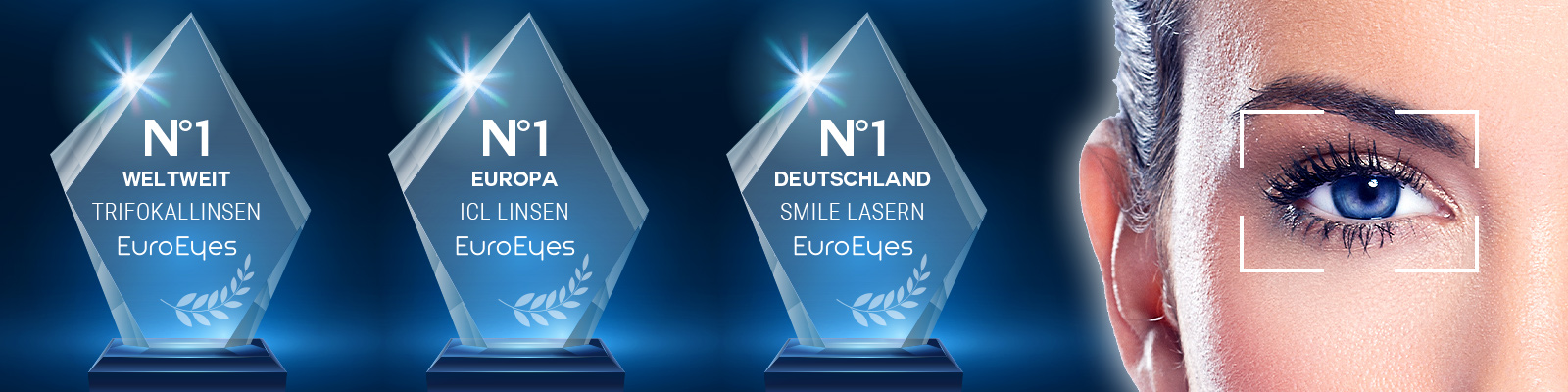
Bei uns sind Sie in guten Händen: EuroEyes hat europaweit die meisten ICL Kontaktlinsen implantiert.
Bei diesem Testergebnis handelt es sich um eine unverbindliche Empfehlung. Im Rahmen eines ausführlichen und persönlichen Beratungsgesprächs wird Ihr Arzt in der intensiven Voruntersuchung feststellen, für welches Verfahren Sie geeignet sind.
Ihre empfohlene Behandlungsmethode:
ReLEx smile oder Femto-LASIK
Die ReLEx smile Technologie ist die sanfte Form des Augenlaserns und ermöglicht eine exakte Korrektur der Kurzsichtigkeit. Auch eine Hornhautverkrümmung ist damit problemlos behandelbar.
Bei der ReLEx smile Behandlung wird die Hornhaut mit einem winzigen, 2 mm kleinen Schnitt geöffnet. Durch dieses „Schlüsselloch“ wird eine, mit dem Femtosekundenlaser präparierte, 3D-Scheibe (Lentikel) entnommen. Dieses Lentikel entspricht exakt in Menge und Größe der zu korrigierenden Fehlsichtigkeit. Für den gesamten Eingriff werden nur 32 Sekunden pro Auge benötigt.
ReLex smile ist besonders für Patienten mit trockenen Augen geeignet.
Alternativ zur ReLEx smile Behandlung können Sie sich für das Augenlaserverfahren der Femto-LASIK entscheiden.
Die Femto-LASIK zählt zu den bewährtesten Verfahren zur Korrektur von Kurzsichtigkeit. Um eine Kurzsichtigkeit mit Femto-LASIK korrigieren zu können, wird ein kleines, rundes Hornhautdeckelchen präpariert. Die Präparation dieser Hornhautlamelle, auch Flap genannt, erfolgt bei der Femto-LASIK mit einem Femtosekundenlaser – ganz ohne den Einsatz mechanischer Schneidinstrumente.
Der Laser startet die maßgefertigte Korrektur der Fehlsichtigkeit und modelliert die Hornhaut. Anschließend wird der Flap wieder zurückgeklappt. Er haftet durch innere Bindungskräfte von selbst wieder an und schützt wie ein körpereigenes Pflaster.
Bei diesem Testergebnis handelt es sich um eine unverbindliche Empfehlung. Im Rahmen eines ausführlichen und persönlichen Beratungsgesprächs wird Ihr Arzt in der intensiven Voruntersuchung feststellen, für welches Verfahren Sie geeignet sind.
Ihre empfohlene Behandlungsmethode:
ReLEx smile oder Femto-LASIK
Die ReLEx smile Technologie ist die sanfte Form des Augenlaserns und ermöglicht eine exakte Korrektur der Kurzsichtigkeit. Auch eine Hornhautverkrümmung ist damit problemlos behandelbar.
Bei der ReLEx smile Behandlung wird die Hornhaut mit einem winzigen, 2 mm kleinen Schnitt geöffnet. Durch dieses „Schlüsselloch“ wird eine, mit dem Femtosekundenlaser präparierte, 3D-Scheibe (Lentikel) entnommen. Dieses Lentikel entspricht exakt in Menge und Größe der zu korrigierenden Fehlsichtigkeit. Für den gesamten Eingriff werden nur 32 Sekunden pro Auge benötigt.
ReLex smile ist besonders für Patienten mit trockenen Augen geeignet.
Alternativ zur ReLEx smile Behandlung können Sie sich für das Augenlaserverfahren der Femto-LASIK entscheiden.
Die Femto-LASIK zählt zu den bewährtesten Verfahren zur Korrektur von Hornhautverkrümmung. Um eine Hornhautverkrümmung mit Femto-LASIK korrigieren zu können, wird ein kleines, rundes Hornhautdeckelchen präpariert. Die Präparation dieser Hornhautlamelle, auch Flap genannt, erfolgt bei der Femto-LASIK mit einem Femtosekundenlaser – ganz ohne den Einsatz mechanischer Schneidinstrumente.
Der Laser startet die maßgefertigte Korrektur der Fehlsichtigkeit und modelliert die Hornhaut. Anschließend wird der Flap wieder zurückgeklappt. Er haftet durch innere Bindungskräfte von selbst wieder an und schützt wie ein körpereigenes Pflaster.
Bei diesem Testergebnis handelt es sich um eine unverbindliche Empfehlung. Im Rahmen eines ausführlichen und persönlichen Beratungsgesprächs wird Ihr Arzt in der intensiven Voruntersuchung feststellen, für welches Verfahren Sie geeignet sind.
Ihre empfohlene Behandlungsmethode:
Femto-LASIK
Die Femto-LASIK zählt zu den bewährtesten Verfahren zur Korrektur von Weitsichtigkeit . Um eine Fehlsichtigkeit mit einer Femto-LASIK-Behandlung korrigieren zu können, wird ein kleines, rundes Hornhautdeckelchen präpariert. Die Präparation dieser Hornhautlamelle, auch Flap genannt, erfolgt bei der Femto-LASIK mit einem Femtosekundenlaser – ganz ohne den Einsatz mechanischer Schneidinstrumente.
Der Laser startet die maßgefertigte Korrektur der Fehlsichtigkeit und modelliert die Hornhaut. Anschließend wird der Flap wieder zurückgeklappt. Er haftet durch innere Bindungskräfte von selbst wieder an und schützt wie ein körpereigenes Pflaster.
Eine Femto-LASIK Behandlung ist aus medizinischer Sicht möglich. Um jedoch den Grauen Star vorzubeugen, empfehlen wir das Einsetzen von Trifokal-/Multifokallinsen.
Bei diesem Testergebnis handelt es sich um eine unverbindliche Empfehlung. Im Rahmen eines ausführlichen und persönlichen Beratungsgesprächs wird Ihr Arzt in der intensiven Voruntersuchung feststellen, für welches Verfahren Sie geeignet sind.
Ihre empfohlene Behandlungsmethode:
Femto-LASIK
Die Femto-LASIK zählt zu den bewährtesten Verfahren zur Korrektur von Weitsichtigkeit . Um eine Fehlsichtigkeit mit einer Femto-LASIK-Behandlung korrigieren zu können, wird ein kleines, rundes Hornhautdeckelchen präpariert. Die Präparation dieser Hornhautlamelle, auch Flap genannt, erfolgt bei der Femto-LASIK mit einem Femtosekundenlaser – ganz ohne den Einsatz mechanischer Schneidinstrumente.
Der Laser startet die maßgefertigte Korrektur der Fehlsichtigkeit und modelliert die Hornhaut. Anschließend wird der Flap wieder zurückgeklappt. Er haftet durch innere Bindungskräfte von selbst wieder an und schützt wie ein körpereigenes Pflaster.
Eine Femto-LASIK Behandlung ist aus medizinischer Sicht möglich. Um jedoch den Grauen Star vorzubeugen, empfehlen wir das Einsetzen von Trifokal-/Multifokallinsen.
Bei diesem Testergebnis handelt es sich um eine unverbindliche Empfehlung. Im Rahmen eines ausführlichen und persönlichen Beratungsgesprächs wird Ihr Arzt in der intensiven Voruntersuchung feststellen, für welches Verfahren Sie geeignet sind.
Ihre empfohlene Behandlungsmethode:
ReLEx smile
Die ReLEx smile Technologie ist die sanfte Form des Augenlaserns und ermöglicht eine exakte Korrektur der Kurzsichtigkeit. Auch eine Hornhautverkrümmung ist damit problemlos behandelbar.
Bei der ReLEx smile Behandlung wird die Hornhaut mit einem winzigen, 2 mm kleinen Schnitt geöffnet. Durch dieses „Schlüsselloch“ wird eine, mit dem Femtosekundenlaser präparierte, 3D-Scheibe (Lentikel) entnommen. Dieses Lentikel entspricht exakt in Menge und Größe der zu korrigierenden Fehlsichtigkeit. Für den gesamten Eingriff werden nur 32 Sekunden pro Auge benötigt.
Eine ReLex smile Behandlung ist aus medizinischer Sicht möglich. Um jedoch den Grauen Star vorzubeugen, empfehlen wir das Einsetzen von Trifokal-/Multifokallinsen
Bei diesem Testergebnis handelt es sich um eine unverbindliche Empfehlung. Im Rahmen eines ausführlichen und persönlichen Beratungsgesprächs wird Ihr Arzt in der intensiven Voruntersuchung feststellen, für welches Verfahren Sie geeignet sind.
Ihre empfohlene Behandlungsmethode:
Trifokal-/Multifokallinsen
Das Einsetzen von Trifokal-/Multifokallinsen, auch trifokal-/multifokale Intraokularlinsen genannt, ist eine sichere und präzise Methode zur Korrektur von Kurzsichtigkeit . Dabei wird die körpereigene, nicht mehr funktionstüchtige Linse durch eine Kunstlinse (multifokale Linse) ersetzt.
Die hochentwickelte Kunstlinse besitzt mehrere Brennpunkte und ermöglicht so das Sehen in unterschiedlichen Entfernungen ohne Brille. Diese sehr gut verträglichen Linsen können lebenslang im Auge verweilen und sind nicht sichtbar.
Dieser Refraktive Linsenersatz (RLE) ist ein sehr erprobtes Verfahren und wird seit Jahrzehnten bei der Behandlung des Grauen Stars angewendet, die weltweit am häufigsten durchgeführte Operation. Zudem hat EuroEyes weltweit die meisten Multifokallinsen implantiert.
Bei diesem Testergebnis handelt es sich um eine unverbindliche Empfehlung. Im Rahmen eines ausführlichen und persönlichen Beratungsgesprächs wird Ihr Arzt in der intensiven Voruntersuchung feststellen, für welches Verfahren Sie geeignet sind.
Ihre empfohlene Behandlungsmethode:
Trifokal-/Multifokallinsen
Das Einsetzen von Trifokal-/Multifokallinsen, auch trifokal-/multifokale Intraokularlinsen genannt, ist eine sichere und präzise Methode zur Korrektur von Alterssichtigkeit . Dabei wird die körpereigene, nicht mehr funktionstüchtige Linse durch eine Kunstlinse (multifokale Linse) ersetzt.
Die hochentwickelte Kunstlinse besitzt mehrere Brennpunkte und ermöglicht so das Sehen in unterschiedlichen Entfernungen ohne Brille. Diese sehr gut verträglichen Linsen können lebenslang im Auge verweilen und sind nicht sichtbar.
Dieser Refraktive Linsenersatz (RLE) ist ein sehr erprobtes Verfahren und wird seit Jahrzehnten bei der Behandlung des Grauen Stars angewendet, die weltweit am häufigsten durchgeführte Operation. Zudem hat EuroEyes weltweit die meisten Multifokallinsen implantiert.
Bei diesem Testergebnis handelt es sich um eine unverbindliche Empfehlung. Im Rahmen eines ausführlichen und persönlichen Beratungsgesprächs wird Ihr Arzt in der intensiven Voruntersuchung feststellen, für welches Verfahren Sie geeignet sind.
Ihre empfohlene Behandlungsmethode:
Trifokal-/Multifokallinsen
Das Einsetzen von Trifokal-/Multifokallinsen, auch trifokal-/multifokale Intraokularlinsen genannt, ist eine sichere und präzise Methode zur Korrektur von Weitsichtigkeit . Dabei wird die körpereigene, nicht mehr funktionstüchtige Linse durch eine Kunstlinse (multifokale Linse) ersetzt.
Die hochentwickelte Kunstlinse besitzt mehrere Brennpunkte und ermöglicht so das Sehen in unterschiedlichen Entfernungen ohne Brille. Diese sehr gut verträglichen Linsen können lebenslang im Auge verweilen und sind nicht sichtbar.
Dieser Refraktive Linsenersatz (RLE) ist ein sehr erprobtes Verfahren und wird seit Jahrzehnten bei der Behandlung des Grauen Stars angewendet, die weltweit am häufigsten durchgeführte Operation. Zudem hat EuroEyes weltweit die meisten Multifokallinsen implantiert.
Bei diesem Testergebnis handelt es sich um eine unverbindliche Empfehlung. Im Rahmen eines ausführlichen und persönlichen Beratungsgesprächs wird Ihr Arzt in der intensiven Voruntersuchung feststellen, für welches Verfahren Sie geeignet sind.
Ihre empfohlene Behandlungsmethode:
Trifokal-/Multifokallinsen
Das Einsetzen von Trifokal-/Multifokallinsen, auch trifokal-/multifokale Intraokularlinsen genannt, ist eine sichere und präzise Methode zur Korrektur von Hornhautverkrümmung . Dabei wird die körpereigene, nicht mehr funktionstüchtige Linse durch eine Kunstlinse (multifokale Linse) ersetzt.
Die hochentwickelte Kunstlinse besitzt mehrere Brennpunkte und ermöglicht so das Sehen in unterschiedlichen Entfernungen ohne Brille. Diese sehr gut verträglichen Linsen können lebenslang im Auge verweilen und sind nicht sichtbar.
Dieser Refraktive Linsenersatz (RLE) ist ein sehr erprobtes Verfahren und wird seit Jahrzehnten bei der Behandlung des Grauen Stars angewendet, die weltweit am häufigsten durchgeführte Operation. Zudem hat EuroEyes weltweit die meisten Multifokallinsen implantiert.
Bei diesem Testergebnis handelt es sich um eine unverbindliche Empfehlung. Im Rahmen eines ausführlichen und persönlichen Beratungsgesprächs wird Ihr Arzt in der intensiven Voruntersuchung feststellen, für welches Verfahren Sie geeignet sind.
Ihre empfohlene Behandlungsmethode:
Trifokal-/Multifokallinsen
Das Einsetzen von Trifokal-/Multifokallinsen, auch trifokal-/multifokale Intraokularlinsen genannt, ist eine sichere und präzise Methode zur Korrektur von Hornhautverkrümmung . Dabei wird die körpereigene, nicht mehr funktionstüchtige Linse durch eine Kunstlinse (multifokale Linse) ersetzt.
Die hochentwickelte Kunstlinse besitzt mehrere Brennpunkte und ermöglicht so das Sehen in unterschiedlichen Entfernungen ohne Brille. Diese sehr gut verträglichen Linsen können lebenslang im Auge verweilen und sind nicht sichtbar.
Dieser Refraktive Linsenersatz (RLE) ist ein sehr erprobtes Verfahren und wird seit Jahrzehnten bei der Behandlung des Grauen Stars angewendet, die weltweit am häufigsten durchgeführte Operation. Zudem hat EuroEyes weltweit die meisten Multifokallinsen implantiert.
Bei diesem Testergebnis handelt es sich um eine unverbindliche Empfehlung. Im Rahmen eines ausführlichen und persönlichen Beratungsgesprächs wird Ihr Arzt in der intensiven Voruntersuchung feststellen, für welches Verfahren Sie geeignet sind.
Ihre empfohlene Behandlungsmethode:
Trifokal-/Multifokallinsen
Das Einsetzen von Trifokal-/Multifokallinsen, auch trifokal-/multifokale Intraokularlinsen genannt, ist eine sichere und präzise Methode zur Korrektur von Weitsichtigkeit . Dabei wird die körpereigene, nicht mehr funktionstüchtige Linse durch eine Kunstlinse (multifokale Linse) ersetzt.
Die hochentwickelte Kunstlinse besitzt mehrere Brennpunkte und ermöglicht so das Sehen in unterschiedlichen Entfernungen ohne Brille. Diese sehr gut verträglichen Linsen können lebenslang im Auge verweilen und sind nicht sichtbar.
Dieser Refraktive Linsenersatz (RLE) ist ein sehr erprobtes Verfahren und wird seit Jahrzehnten bei der Behandlung des Grauen Stars angewendet, die weltweit am häufigsten durchgeführte Operation. Zudem hat EuroEyes weltweit die meisten Multifokallinsen implantiert.
Bei diesem Testergebnis handelt es sich um eine unverbindliche Empfehlung. Im Rahmen eines ausführlichen und persönlichen Beratungsgesprächs wird Ihr Arzt in der intensiven Voruntersuchung feststellen, für welches Verfahren Sie geeignet sind.
Ihre empfohlene Behandlungsmethode:
Trifokal-/Multifokallinsen
Das Einsetzen von Trifokal-/Multifokallinsen, auch trifokal-/multifokale Intraokularlinsen genannt, ist eine sichere und präzise Methode zur Korrektur von Alterssichtigkeit . Dabei wird die körpereigene, nicht mehr funktionstüchtige Linse durch eine Kunstlinse (multifokale Linse) ersetzt.
Die hochentwickelte Kunstlinse besitzt mehrere Brennpunkte und ermöglicht so das Sehen in unterschiedlichen Entfernungen ohne Brille. Diese sehr gut verträglichen Linsen können lebenslang im Auge verweilen und sind nicht sichtbar.
Dieser Refraktive Linsenersatz (RLE) ist ein sehr erprobtes Verfahren und wird seit Jahrzehnten bei der Behandlung des Grauen Stars angewendet, die weltweit am häufigsten durchgeführte Operation. Zudem hat EuroEyes weltweit die meisten Multifokallinsen implantiert.
Bei diesem Testergebnis handelt es sich um eine unverbindliche Empfehlung. Im Rahmen eines ausführlichen und persönlichen Beratungsgesprächs wird Ihr Arzt in der intensiven Voruntersuchung feststellen, für welches Verfahren Sie geeignet sind.
Ihre empfohlene Behandlungsmethode:
Trifokal-/Multifokallinsen
Das Einsetzen von Trifokal-/Multifokallinsen, auch trifokal-/multifokale Intraokularlinsen genannt, ist eine sichere und präzise Methode zur Korrektur von Alterssichtigkeit Kurzsichtigkeit . Dabei wird die körpereigene, nicht mehr funktionstüchtige Linse durch eine Kunstlinse (multifokale Linse) ersetzt.
Die hochentwickelte Kunstlinse besitzt mehrere Brennpunkte und ermöglicht so das Sehen in unterschiedlichen Entfernungen ohne Brille. Diese sehr gut verträglichen Linsen können lebenslang im Auge verweilen und sind nicht sichtbar.
Dieser Refraktive Linsenersatz (RLE) ist ein sehr erprobtes Verfahren und wird seit Jahrzehnten bei der Behandlung des Grauen Stars angewendet, die weltweit am häufigsten durchgeführte Operation. Zudem hat EuroEyes weltweit die meisten Multifokallinsen implantiert.
Bei diesem Testergebnis handelt es sich um eine unverbindliche Empfehlung. Im Rahmen eines ausführlichen und persönlichen Beratungsgesprächs wird Ihr Arzt in der intensiven Voruntersuchung feststellen, für welches Verfahren Sie geeignet sind.
Darf unser Service Center Sie kontaktieren?
Ihr Vorname*
Ihr Nachname*
Ihre E-Mail Adresse*
Ihre Telefonnummer*
Ihr Alter*
Standort* Standort wählen Augsburg Berlin Bremen Dresden Düsseldorf Frankfurt Hamburg Hannover Leipzig Lübeck München Oberhausen Oldenburg Stuttgart
Anmerkung
*
Name
Dieses Feld dient zur Validierung und sollte nicht verändert werden.